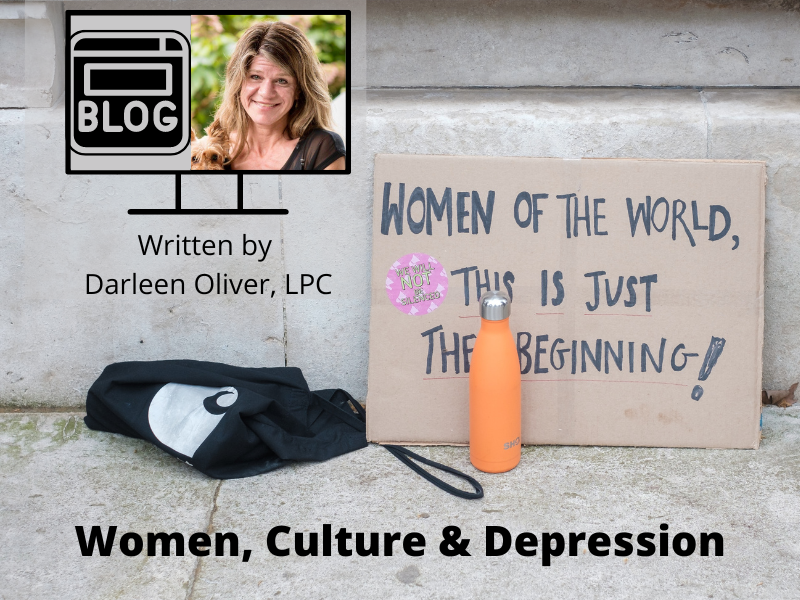
Women, Culture and Depression
An Opinion Blog by Darleen Oliver, LPC, CAADC
We live in a society where, despite all the advancements in advocating for equality for women, women still can be held to a different standard than men. The good news is that even though these subliminal messages can be very disempowering, women can decide not to subscribe to other people’s views.
An example message that women receive is the need for self-denial.
The theme: others define us as the caretakers and the peacemakers. True, we have a great capacity for nurturing, but the message is out of balance. The message may imply that women should not make waves, speak up, advocate for themselves, or even have a voice. It implies we should smooth things over despite ourselves. When other people’s needs are prioritized, women may start denying we even have needs, knowing what we are, and feeling disconnected from ourselves. These messages, thoughts, and ideas can, over time, significantly increase depressive and anxious thought patterns and symptoms.
Guilt
In my years of practice as a licensed mental health therapist, countless women have told me that they feel “guilty” and “selfish” for thinking of themselves and having good self-care. Since the Christian creation of men, women have been portrayed as society’s scapegoats. Adam didn’t take personal responsibility for eating the apple when confronted. Instead, he blamed Eve and told God, “The woman made me do it.”
In becoming empowered and healing, we need to identify where this logic is being played out and reject it. We can choose not to accept personal responsibility for someone else’s shame when they don’t want to take personal responsibility for it. We don’t have to accept it. It was never ours to carry.
Healthy boundaries and self-care are two essential aspects of good mental health practices, including emotional boundaries. Imagine an invisible wall between you and the other person. We can choose the messages, perceptions, and ideologies we allow in our inner wall and the ones we won’t. Words, thoughts, messages, and perspectives are powerful. We deserve to accept those who promote self-love and healing and reject those who don’t. We are strong, we are powerful, and we are light. We can choose to shine.
Learn more about Darlene or schedule an appointment.
The views, opinions, and content of this opinion article belong to Darlene Oliver and not Move Forward Counseling, LLP.